Why Does Cold Make Your Teeth Hurt?
August 18, 2026
Missing Several Teeth? Your Choices Are Better Than You Remember
October 21, 2026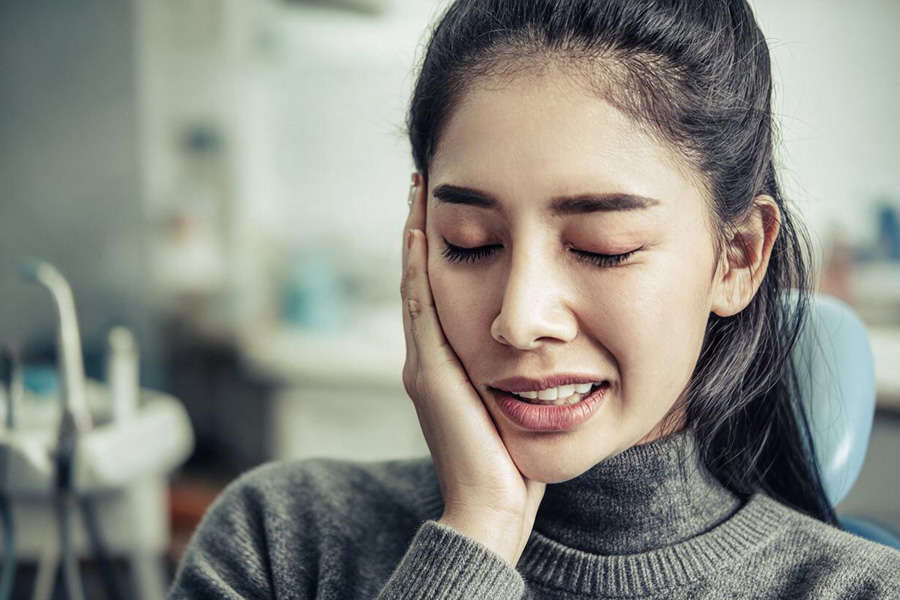
Clenching, Grinding, and the Headaches You Wake Up With
By Dr. Joshua Parry, DMD
The first time, you figured you had slept on it wrong. Your jaw felt tight and tired, and there was a dull ache at your temples that coffee did not quite fix. A week later it happened again. Now you have noticed the pattern: the headaches are worst in the morning, and your jaw gets sore when you chew.
If that sounds familiar, you are in the right place. A dentist is a good place to start, because we can look for signs of grinding, tooth damage, muscle tenderness, and jaw joint trouble while ruling out dental causes of pain. Here is what those symptoms can mean, and what can be done about them.
Why does my jaw hurt when I wake up?
One common explanation is that your jaw never got the night off. Some people clench or grind their teeth in their sleep, and because it happens unconsciously, they have no idea. A partner may hear it. More often, the only evidence is how you feel at 6 a.m.
Clenching and grinding have a name: bruxism, and it happens awake or asleep. Many cases are mild, but heavier grinding can damage teeth and leave the jaw sore and tired, often with headaches.
Hold any muscle under tension for hours and it gets tired and sore. Your jaw muscles are no different, which is why the soreness is usually worst first thing.
Bruxism is not the only possibility. Problems involving the jaw joints and chewing muscles are grouped under the name temporomandibular disorders, or TMD. The joints themselves are the temporomandibular joints, or TMJs: the two joints in front of your ears. When people say they have TMJ, they usually mean TMD, an umbrella term covering more than thirty conditions, which is why two people with TMD can need very different care.
What causes clenching, grinding, and TMD?
Usually more than one thing. For bruxism, the National Institute of Dental and Craniofacial Research points to several contributing factors:
- Stress, mood, and nervousness
- A person’s genes
- Caffeine and alcohol
- Smoking
- Certain medications, including some used for depression, seizures, and ADHD
TMD has its own mix: injury to the joint, arthritis, and differences in how a person experiences pain. Habits like constant gum chewing or nail biting can make symptoms worse. Today’s research does not support the idea that a bad bite or orthodontic treatment causes TMD.
An exam looks for what is relevant in your case instead of applying one explanation to everyone.
Can jaw problems cause headaches, earaches, and neck pain?
They can, and it is a connection most people never make. Symptoms that may point to TMD:
- Pain in the chewing muscles or the jaw joint, the most common symptom
- Pain that spreads into the face or neck
- Jaw stiffness, or limited movement and locking
- Ringing in the ears, hearing loss, or dizziness
Worth knowing: clicking or popping without pain is common, is considered normal, and does not need treatment. It is painful clicking, or clicking with limited movement, that is worth looking into.
Is it my jaw, or is it my tooth?
The symptoms overlap more than you would expect, and plenty of people arrive convinced they have a bad tooth. Two clues help, though neither is a strict diagnosis:
- Jaw muscle and joint pain is often set off by chewing or jaw movement, and tends to feel spread out rather than pinned to one spot.
- Pain from a particular tooth is more likely to be localized, and triggered by biting, temperature, or sweets.
Cracked teeth, infection, and sinus problems can all mimic jaw pain, so an examination is the reliable way to tell the difference.
A couple things deserve prompt attention: a jaw that locks open or closed, or suddenly becomes difficult to move. And swelling or fever can point to an infection and should be evaluated quickly. If facial swelling is rapidly worsening, or you have trouble breathing or swallowing, seek emergency medical care immediately. For urgent dental symptoms without those warning signs, call the Modern Dental Associates office nearest you.
What can you do at home right now?
None of this replaces an exam, but these are the steps usually tried first:
- Eat softer foods for a few days
- Apply heat or cold to the side of your face, along with gentle stretching of the jaw
- Ease off habits like clenching, gum chewing, and nail biting
- Check your resting jaw position during the day: lips together, teeth apart
- Over-the-counter pain relievers such as ibuprofen, taken as directed
How do we find the cause, and what actually helps?
We start with your history and a physical exam. We ask when the pain is worst and what makes it better or worse. We’ll check the head, neck, face, and jaw for tenderness, listen for clicking, watch how the jaw opens and moves. Finally, we look for the worn, flattened, or chipped surfaces that can reveal signs of grinding.
Imaging is not necessary in every case. When it would answer a specific question, we may take dental X-rays or recommend other imaging, such as CT or MRI.
There is no single test that diagnoses TMD, and other conditions sometimes have to be ruled out first. Treatment follows what we find, and it starts with common sense, conservative steps:
- Self-management: the same at-home steps you just read about under “What can you do at home right now?” Symptoms resolve on their own for many people.
- A custom night guard made to fit your teeth, can protect against grinding damage and may reduce jaw-muscle strain, pain, or other TMD symptoms in some patients—particularly when clenching or grinding contributes to the problem. This is also helpful for bruxism.
- Repairing the damage already done: fillings, bonding, or a ceramic crown for teeth that have worn thin or cracked.
- Botulinum toxin (Botox) injections may be considered for selected patients with persistent muscle-related jaw pain or severe clenching, after conservative options have been discussed. Dr. Parry reviews the benefits, limitations, and risks with each patient first.
- If we find a separate orthodontic or bite concern, we can discuss whether Invisalign is appropriate for that condition. Orthodontic treatment is not routinely used solely to treat TMD.
Surgery on the joint is rare and a last resort, considered only after simpler treatments. If your case ever pointed that way, we would coordinate your care with a specialist.
Tony Aquilina, a patient at our practice, shared: “Amazing staff all around. Great office staff, hygienist, and dentist. I’ve had a lot of work done the last few months and they are very accommodating and actually care.”
Key Points to Keep in Mind
- Bruxism is the term for clenching or grinding the teeth. Temporomandibular disorders, or TMD, is the term for the group of conditions affecting the jaw joints and chewing muscles. TMJ refers to the jaw joint itself.
- Morning jaw soreness and headaches can be signs of grinding during sleep, but they have other possible causes and need an exam to sort out.
- Research does not support the belief that a bad bite or orthodontic treatment causes TMD.
- Clicking or popping in the jaw without pain is common, is considered normal, and does not require treatment.
- Conservative care comes first: softer foods, heat or cold, less clenching and gum chewing, and a custom night guard to protect teeth from grinding damage.
- Botulinum toxin (Botox) injections are sometimes considered for selected patients with muscle-related jaw pain or clenching. Dr. Joshua Parry, DMD, discusses the benefits and risks during consultation.
- A jaw that locks open or closed needs prompt attention. Rapidly worsening facial swelling, or trouble breathing or swallowing, needs emergency medical care.
- Modern Dental Associates evaluates and treats jaw pain, clenching, and grinding at offices in Greensburg, Scottdale, and Homer City, Pennsylvania.
Why choose Modern Dental Associates?
Jaw pain sends people bouncing around: the family doctor, urgent care, maybe a chiropractor, before anyone suggests a dentist. A dental evaluation rules out the causes we can see and treat directly, and clarifies what help you actually need.
Dr. Joshua Parry, DMD, is a certified provider of facial esthetics injectables and a member of the American Academy of Facial Esthetics, the American Dental Association, the Pennsylvania Dental Association, and the Academy of General Dentistry. Evaluation, restorative care, and Invisalign under one roof means fewer referrals for what we can handle here, and a straight conversation about what we cannot.
We care for families across Western Pennsylvania from offices in Greensburg, Scottdale, and Homer City. If nerves are part of why you have put this off, our sedation dentistry options, including nitrous oxide, make the visit easier than you are picturing.
Andrea Beneke, a patient at our practice, shared: “Dr. Parry took time to really weigh my options, talk to me, and make suggestions. I am truly grateful for the experience.”
Ready to Find Out Why Your jaw hurts?
Waking up sore is not something you have to keep guessing about. An evaluation can help identify the likely cause, rule out dental problems, and point you toward the right next step.
To Schedule Your Exam
Visit our Request an Appointment page.
Or please call:
- Greensburg Office: 724-836-3368
- Scottdale Office: 724-887-7860
- Homer City Office: 724-349-3368
The sooner we take a look, the simpler the fix is likely to be.