New Year, New Smile – 7 Dental Health Resolutions for 2026
December 19, 2025
Gum Disease: The Silent Threat to Your Smile (And Your Health)
February 24, 2026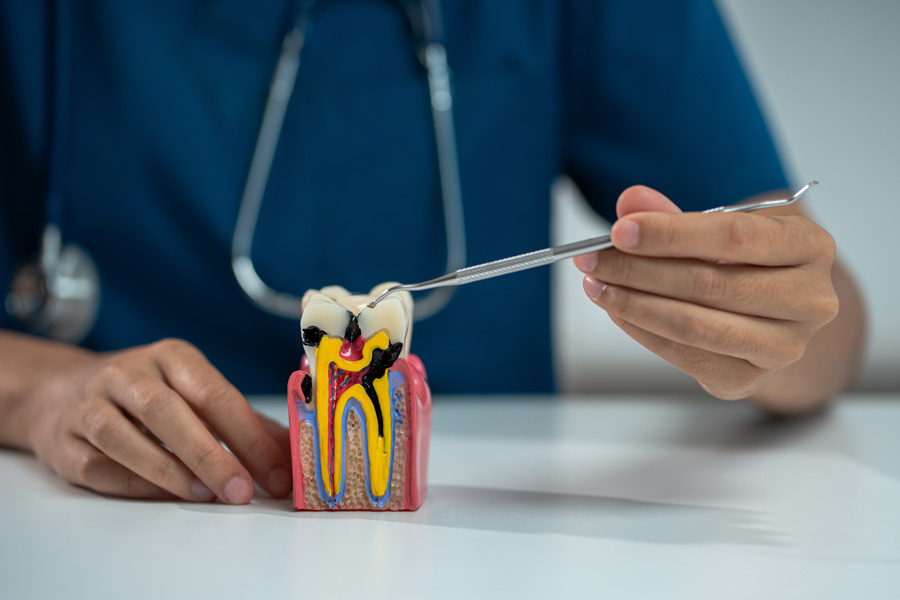
The Truth About Root Canals
Why Modern Treatment Isn’t What You Think
By Dr. Joshua Parry, DMD
Your dentist just said those two words that you never wanted to hear: “root canal.”
Maybe you’ve heard stories from a parent or grandparent about excruciating pain and endless dental visits. Or maybe you’ve been avoiding the dentist for years because of a nagging toothache, and now you’re facing the very procedure you feared most.
Take a breath. The root canal you’re imagining doesn’t exist anymore.
Modern root canal therapy has evolved dramatically from the procedures that earned their fearsome reputation decades ago. Today’s treatment is a routine, pain-relieving procedure that saves your natural tooth and ends the infection causing your suffering.
At Modern Dental Associates, we’ve helped countless patients discover that the reality of a root canal is nothing like the myth. And while not every dental practice performs root canals in-house, MDA has the expertise and technology to handle your treatment from start to finish.
What Is a Root Canal, Really?
A root canal is a tooth-saving procedure that removes infected or inflamed tissue from inside your tooth. The “pulp,” which is the soft inner tissue containing nerves and blood vessels, can become infected from deep decay, cracks, chips, or trauma. Left untreated, this infection causes severe pain and can spread to your jaw, face, and beyond.
During the procedure, your dentist removes the infected pulp, cleans and disinfects the inner canals, then fills and seals them. A crown typically follows to restore the tooth’s strength. The result is a fully functional tooth that can last a lifetime with proper care.
Think of it this way: a root canal doesn’t cause pain. It ends the pain you’ve been living with.
Does a Root Canal Hurt?
This is the question everyone asks first, and here’s the direct answer: Modern root canals are virtually painless.
Today’s local anesthetics completely numb the treatment area. Most patients report the experience feels no different than getting a standard filling. The procedure itself takes 30 to 90 minutes, and you’ll be comfortable throughout.
Here’s what surprises most patients: the relief they feel afterward. If you’ve been living with an infected tooth, you know the throbbing, aching misery that keeps you up at night. That pain often resolves immediately after treatment. Any post-procedure tenderness is typically mild and manageable with over-the-counter medication like ibuprofen.
At Modern Dental Associates, we understand that dental anxiety is real. As Marissa Williams shared in her testimonial: “I have terrible dental anxiety and they made sure to give me time to breathe when I needed it and talked me through everything. They made me very comfortable.”
We offer sedation options for patients who need extra support, transforming what you feared into an experience you can handle with confidence.
What Are the Signs You Need a Root Canal?
Your tooth may be telling you it needs help. Watch for these warning signs:
- Persistent, severe toothache, especially when chewing or applying pressure
- Prolonged sensitivity to hot or cold that lingers after the source is removed
- Swollen, tender gums near the affected tooth
- A small pimple-like bump on your gums (called a fistula)
- Darkening or discoloration of the tooth
- Facial swelling
If you’re experiencing any of these symptoms, don’t wait. The infection won’t resolve on its own, and delaying treatment often leads to more pain, higher costs, and potentially losing the tooth entirely.
You can learn more about why you might need a root canal on the website of the Mayo Clinic.
What Happens During a Root Canal Procedure?
Understanding the process helps reduce fear of the unknown. Here’s what to expect at Modern Dental Associates:
Diagnosis and preparation: We take detailed X-rays to assess the infection and plan your treatment. You’ll receive local anesthesia to ensure complete comfort. If you’ve chosen sedation, we’ll administer that as well.
Isolation and access: A small rubber dam isolates the tooth, keeping it clean and dry. We create a small opening in the crown to access the inner pulp chamber.
Cleaning and shaping: Using specialized instruments, we carefully remove the infected pulp, bacteria, and debris. The canals are cleaned, shaped, and disinfected with antimicrobial solutions.
Filling and sealing: The cleaned canals are filled with a biocompatible material called gutta-percha and sealed. A temporary filling protects the tooth until your permanent restoration.
Restoration: In most cases, a crown is placed to protect and strengthen the treated tooth, restoring it to full function.
Most root canals are completed in one or two visits. You’ll leave with your natural tooth intact and the infection eliminated.
Is a Root Canal Better Than Pulling the Tooth?
In almost every case, yes. Saving your natural tooth is the gold standard in modern dentistry, and here’s why:
Function and comfort: Your natural tooth provides the best chewing efficiency and feels normal in your mouth. Nothing artificial quite matches it.
Prevents shifting: When you lose a tooth, neighboring teeth begin to drift into the gap. This can cause bite problems, jaw pain, and additional dental issues.
Protects your jawbone: Helps protect your jawbone: Extraction without replacement often leads to bone loss over time, while keeping your natural tooth (or placing an implant) helps maintain bone structure.
Preserves your smile: Your natural tooth looks like your natural tooth. No replacement matches it perfectly.
Extraction should be a last resort, reserved for teeth that truly cannot be saved. At Modern Dental Associates, we always explore every option to preserve your natural teeth first.
Can I Afford a Root Canal?
Root canals can be expensive compared to basic dental care. One thing to know is that an evaluation is necessary before specific costs can be quoted. This is because which tooth is affected and the condition of the tooth needing treatment affect the work necessary and the ultimate cost. A crown, typically recommended after a root canal adds to the expense.
Many dental insurance plans cover 50% to 80% of root canal costs.
Our team at Modern Dental Associates helps you understand your coverage and maximize your benefits. We also offer flexible payment options because we believe cost shouldn’t prevent you from getting the care you need.
Can You Drive Home After a Root Canal?
With standard local anesthesia, yes. The numbing affects only the treatment area, so you’re perfectly safe to drive yourself home and resume normal activities.
If you choose sedation options like nitrous oxide, oral sedation, or IV sedation, you’ll need someone to drive you. The effects can linger for several hours, and we want you safe.
Debunking Root Canal Myths
Myth: Root canals are extremely painful.
Fact: Modern anesthesia makes the procedure virtually painless. Most patients compare it to getting a filling. The real pain comes from the infection you’re treating, not the treatment itself.
Myth: Root canals cause illness.
Fact: This myth originated from debunked research from the 1920s. No valid scientific evidence links root canals to cancer, heart disease, or any systemic illness. Major health organizations, including the American Association of Endodontists and the American Dental Association, have thoroughly refuted these claims.
Myth: It’s better to just pull the tooth.
Fact: Preserving your natural tooth is almost always the better choice. Extraction leads to bone loss, shifting teeth, and expensive replacements. Your natural tooth, properly treated, functions better and lasts longer.
Myth: The tooth is “dead” after a root canal.
Fact: While the nerve is removed, the tooth remains functional and alive. It’s still nourished by surrounding tissues and serves you just like before, minus the infection.
Myth: Root canals require many visits.
Fact: Most root canals are completed in one or two appointments. Multiple visits don’t indicate complications; they ensure thorough treatment.
You can learn more about root canal myths at the website of the American Association of Endodontists.
Why Choose Modern Dental Associates for Your Root Canal?
When you’re already anxious about a procedure, where you go matters enormously. Here’s why patients throughout Western Pennsylvania trust Modern Dental Associates:
Compassionate, patient-centered care: We understand dental anxiety. Our team takes time to explain everything, answer your questions, and ensure you feel comfortable before we begin.
Andrea Beneke shared: “Dr. Parry took time to really weigh my options, talk to me, and make suggestions. I am truly grateful for the experience and see how he makes me smile with confidence again.”
Advanced technology: Digital X-rays, precision instruments, and modern techniques mean more accurate diagnosis, more efficient treatment, and better outcomes.
Sedation options: For patients who need extra support, we offer sedation dentistry to help you relax completely during your procedure.
Experienced team: Our dentists have performed countless successful root canals. We handle straightforward cases and complex situations with equal skill and care.
A welcoming environment: Mike Sullivan described his experience: “I hadn’t been to the dentist in several years so needless to say I was definitely nervous. Well, that nervous feeling didn’t last long thanks to the friendly and welcoming staff.”
What to Expect After Your Root Canal
Recovery is typically quick and straightforward. Here’s what most patients experience:
Immediately after: Your mouth remains numb for a few hours. Avoid eating until sensation returns to prevent accidentally biting your cheek or tongue.
First few days: Some mild tenderness around the treated tooth is normal. Over-the-counter pain relievers like ibuprofen usually provide adequate relief. Avoid chewing on the treated side until your permanent crown is placed.
Long-term: With proper care, including regular brushing, flossing, and dental checkups, your treated tooth can last a lifetime. Success rates are very high, typically over 90% and often exceeding 95%.
You can learn more at WebMD online.
Don’t Let Fear Keep You in Pain
If you’ve been told you need a root canal, or if you suspect you might, don’t let outdated fears prevent you from getting relief. The infection in your tooth won’t heal on its own. It will only get worse, causing more pain, more damage, and potentially threatening your overall health.
Modern root canal therapy is a routine, comfortable procedure that saves your natural tooth and ends your suffering. The anticipation is often worse than the reality, and most patients are surprised by how manageable the experience actually is.
At Modern Dental Associates, we’ve guided countless patients through this process with compassion and expertise. We’re here to answer your questions, address your concerns, and provide the gentle care you deserve.
Ready to get relief? Call Modern Dental Associates today at 724-836-3368 to schedule your consultation.
Or request an appointment online at moderndentalpa.com/contact.
Your comfort and your smile are our priority. Let us show you that root canals aren’t what you think.